
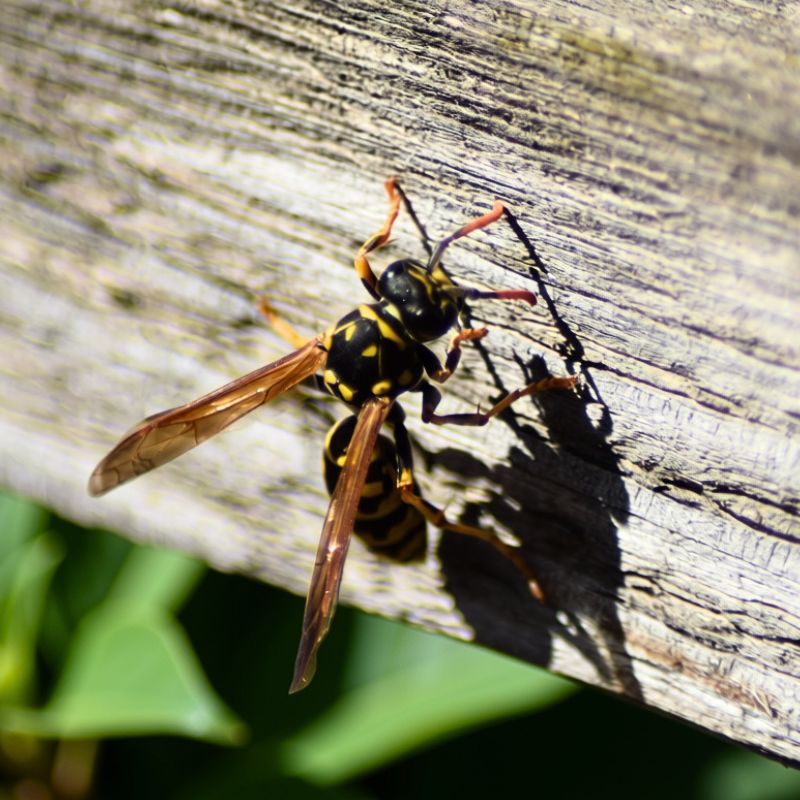
If you’ve noticed more wasps and yellowjackets around playgrounds, athletic fields, and picnic areas, you’re not alone. Increased activity is common during late summer and early fall, particularly while warm temperatures continue.
At this time of year, wasp and yellowjacket colonies are at or near their largest. As their usual food sources change with the season, they spend more time searching for food—including sugary drinks, fruit, snacks, food scraps and garbage. This can make them especially noticeable around picnic tables, playgrounds and areas where people gather.
Park visitors can take a few simple steps to help reduce encounters:
- Keep food and sweet drinks covered when possible.
- Clean up spills and food scraps promptly.
- Place garbage in trash cans.
- Use caution when wasps or yellowjackets are gathering around food or drinks.
If you notice insects repeatedly flying in and out of the same location, there may be a nest nearby. If possible, notify those that manage that facility or park so the area can be evaluated. If you’re at a Sycamore Park District site, email info@sycparks.org or call 815-895-3365.
When a nest is identified in a location that could present a concern for visitors, staff can determine the appropriate response. The Sycamore Park District takes care to avoid broadly spraying outdoor areas when there is no identifiable nest. Spraying may not prevent wasps from visiting and can also affect bees and other beneficial pollinators.
The good news is that this increased activity is seasonal. As temperatures cool and the first hard frosts arrive, wasp and yellowjacket activity will naturally decline.
Thank you for helping us keep an eye on our parks and for doing your part to help keep them safe and enjoyable for everyone this fall!